
ICF Accreditation Explained: The Real Standards Behind Coach Training Programmes
“ICF accredited coaching” is one of the most used phrases in the coach training world—and one of the most misunderstood. Some people assume it means you are instantly “ICF certified”. Others think it’s just a fancy stamp that programmes pay for.
The reality is more practical (and more useful): ICF accreditation is a quality framework for coach education providers, designed to ensure training is built around professional coaching competencies, ethical practice, structured mentoring, and measurable assessment.
In plain English, an ICF-accredited programme is expected to show evidence of four things:
- Standards: Training aligned to ICF Core Competencies and an ethical framework.
- Mentors: Structured mentor coaching delivered over time, not crammed into a weekend.
- Hours: A defined amount of coach-specific contact learning (and, depending on level, minimum requirements).
- Assessments: Observed coaching, written feedback, and performance evaluation at a stated minimum skill level.
This article breaks those pieces down—clearly—so you can tell the difference between meaningful accreditation and marketing language.
What ICF Accreditation Applies To (Programme vs Coach)
First, the most important distinction: ICF accreditation applies to the programme/provider, not automatically to you as an individual coach. Accreditation indicates the training has been designed to meet ICF’s education requirements at a specific level (Level 1, Level 2, or Level 3).
Your individual ICF credential (such as ACC or PCC) is a separate process that typically combines coach education, coaching experience hours, mentor coaching, and evaluation requirements.
So, when you see “ICF accredited coaching”, read it as: “ICF-accredited coach training programme”—a structured education pathway that can support credential applications later.
The Standards: What “Aligned with ICF” Actually Means
ICF sets out Core Competencies as a professional standard for coaching capability. These are organised into four domains—Foundation, Co-Creating the Relationship, Communicating Effectively, and Cultivating Learning and Growth—and are intended to work together in real coaching conversations.
In an ICF-accredited programme, “standards” usually show up in three visible ways:
1) Competency-based teaching (not just inspirational theory)
The curriculum should be built around developing observable coaching behaviours—not simply teaching models, worksheets, or motivational language.
2) Ethical practice as a working skill
Ethics should be treated as something you apply in real scenarios: confidentiality, boundaries, scope of practice, contracting, and the “what do I do when…” moments.
3) Coach mindset and professionalism
ICF positions competence as more than technique—it includes reflective practice, learning orientation, and professionalism as part of being coach-ready.
If a programme can’t clearly explain how its curriculum maps to competencies and ethical practice, that’s a sign you’re looking at “ICF language” rather than ICF-level design.
The Hours: Coach-Specific Contact Learning (What Counts)
One of the clearest aspects of ICF accreditation is that programmes must meet defined learning-hour expectations—depending on level.
Level 1: 60–124 coach-specific contact learning hours
ICF Level 1 accreditation requires 60–124 student coach-specific contact learning hours.
Level 2: 125–175 coach-specific contact learning hours
ICF Level 2 accreditation requires 125–175 student coach-specific contact learning hours.
Level 3: at least 75 hours of student contact learning
ICF Level 3 accreditation requires at least 75 hours of student contact learning (and is framed as deep expertise and ongoing professional growth).
Why this matters: hours alone don’t guarantee quality, but they do create a baseline expectation for training depth and structured development. A “certificate” that’s mostly self-paced videos with minimal interaction may not offer the same competence-building experience as a programme built around coaching practice, feedback loops, and evaluation.
The Mentors: What Mentor Coaching Is (and What It Isn’t)
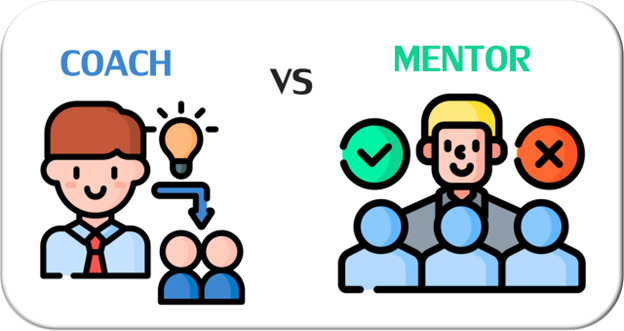
Mentor coaching is one of the strongest signals that an ICF-accredited programme is built for real capability, not just completion certificates.
ICF accreditation standards require programmes to provide 10 hours of mentor coaching over at least three months across Level 1, Level 2, and Level 3.
ICF also distinguishes mentor coaching from other activities that people sometimes mistakenly count as “coaching hours” or “training hours”. For example, ICF notes that mentor coaching and coaching supervision are not counted as client coaching hours when you’re building experience hours.
What mentor coaching typically includes
- Review of your coaching against competencies
- Feedback on recordings (or observed sessions)
- Practical development goals for your next sessions
What mentor coaching should not be
- Generic encouragement with no competency-linked feedback
- A one-off “intensive” squeezed into a single day (ICF expects it to be spread over time)
- A sales call disguised as support
As a buyer, this is a key question: Is mentor coaching truly integrated and structured—or treated as an optional add-on you pay extra for later?
Observations and Feedback: The “Prove It” Requirement
ICF-accredited programmes are not supposed to rely only on attendance and quizzes. They require observed coaching and written feedback.
Level 1: observation + written feedback of five coaching sessions
ICF Level 1 requires observation and written feedback of five coaching sessions.
Level 2: observation + written feedback from six coaching sessions
ICF Level 2 requires observation and written feedback from six coaching sessions.
Level 3: observation + written feedback of five coaching sessions
ICF Level 3 requires observation with written feedback of five coaching sessions.
This matters because coaching improvement depends on specific feedback: where you led the client, where you assumed, where you missed the agenda, where you rescued instead of coached, and where you created insight. Written feedback provides a trackable development trail—not just “good job”.
The Assessments: What a “Performance Evaluation” Means
“Assessment” is where many programmes get vague. ICF-accredited pathways make it explicit.
Level 1: final performance evaluation at ACC minimum skill level
ICF Level 1 requires a final performance evaluation at the ACC minimum skill level.
Level 2: final performance evaluation at PCC minimum skill level
ICF Level 2 requires a final performance evaluation at the PCC minimum skill level.
In other words, Level 2 programmes are expected to assess your coaching at a higher performance standard than Level 1.
Level 3: emphasis on deep expertise and ongoing professional growth
ICF Level 3 is framed around deep expertise in the competencies and ongoing professional growth, alongside its observation and mentor coaching requirements.
If a provider uses the word “assessment”, you want to know:
- What exactly is assessed (a recording, a live observation, a written exam)?
- Who assesses it (faculty, qualified evaluators)?
- What standard is used (ACC-level vs PCC-level performance expectations)?
How Accreditation Connects to ICF Credential Requirements (Without Confusing Them)
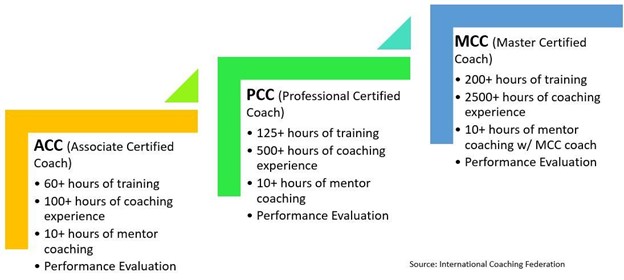
ICF credentialing has its own requirements beyond training—such as coaching experience hours and mentor coaching rules, depending on your application path.
For example, ICF’s mentor coaching guidance explains that for some credential paths, the 10 hours of mentor coaching may be fulfilled within a Level 2 or Level 3 education programme, while other paths require completing mentor coaching before applying.
ICF’s credential application information also references requirements such as coaching experience hours and clarifies mentor coaching expectations (including time spread and one-to-one components in some cases).
The practical takeaway: accredited education can reduce friction, because it packages training, mentoring, observed coaching, and evaluation in a way that aligns with formal expectations—but you still need to meet the broader credential requirements where applicable.
The Most Common Misuse of “ICF Accredited” (and How to Spot It)
Here are patterns that should make you cautious:
1) “ICF accredited” without naming the level
A credible provider can state whether the programme is Level 1, Level 2, or Level 3—and what that implies for hours and evaluation.
2) No clarity on mentor coaching
If they can’t explain how the 10 hours work over three months, that’s a gap against published standards.
3) No observed sessions with written feedback
Observed coaching and written feedback are explicitly required across levels. If the programme relies only on self-assessment or peer praise, it’s missing a major quality component.
4) “Certification guaranteed.”
Training can be accredited; credentials are applied for. If a provider suggests you’re instantly “ICF certified”, that’s at best sloppy wording—and at worst, intentional confusion.
A Practical Buyer’s Checklist (Fast, Useful, No Fluff)
When a programme claims “ICF accredited”, you should be able to confirm:
- Level: 1, 2, or 3 (and it matches the provider’s formal claim)
- Hours: contact learning hours stated clearly (e.g., 60–124 for Level 1; 125–175 for Level 2)
- Mentor coaching: 10 hours over ≥3 months included and explained
- Observed coaching: the required number of observed sessions with written feedback is built in
- Performance evaluation: ACC minimum for Level 1; PCC minimum for Level 2, with a clear evaluation process
If a provider can answer these quickly and clearly, you’re looking at substance. If they dodge, blur, or redirect into sales talk, you’ve saved yourself time and money.
Conclusion
“ICF accredited coaching” isn’t a marketing phrase—it’s a structured education standard built around competency-based learning, supervised development, and measurable evaluation.
When a programme genuinely meets ICF requirements, you should see it in the details: clear learning hours, mentor coaching spread over time, observed sessions with written feedback, and a performance assessment tied to a defined skill level.
Those elements are what turn training into credible, defensible coaching capability—long after the certificate is printed.